Why are automated immunohistochemical staining systems more favored in laboratories? The primary reason lies in its significantly enhanced experimental efficiency and throughput. A standard automated immunohistochemistry stainer can process up to 240 tissue sections within 8 hours, while manual operation can only complete about 40 sections, with an efficiency increase of nearly 500%. For example, the BenchMark ULTRA system of Robonvis can process 30 samples per hour while reducing reagent consumption by 20%. This high-speed processing capability significantly shortens the diagnostic cycle. In large-scale pathological laboratories, the daily sample processing volume can exceed 1,000 cases, making it particularly suitable for high-demand scenarios such as breast cancer HER2 detection or tumor PD-L1 expression screening.
The automated system minimizes human error by precisely controlling experimental parameters. Studies show that the batch-to-batch coefficient of variation (CV) of manual staining results can reach over 15%, while automated equipment can keep it within 5%. Take antibody validation as an example. The Leica BOND-MAX system improves the consistency of antibody staining intensity by 90% through standardized incubation time (accurate to the second level) and temperature control (fluctuation range ±0.5°C). The comparative data from the Mayo Clinic in 2023 shows that the consistency rate of pathological interpretation in automated detection reached 98.2%, significantly higher than 85.7% in manual operation.
From the perspective of long-term operating costs, although the initial investment in automated equipment is relatively high (about 100,000 to 500,000 US dollars), it can reduce the demand for human resources by 60%. Over a five-year period, the laboratory can save approximately 300,000 US dollars in labor costs, with a return on investment (ROI) of 150%. Although the pre-packaged kits used in the Agilent DAKO Omnis system increase the unit price by 15%, they avoid reagent waste and reduce the risk of cross-contamination, resulting in a 25% reduction in the total cost of single-sample testing. In addition, the automated maintenance cycle has been extended to once every six months, and the service life of the equipment can reach 10 years.
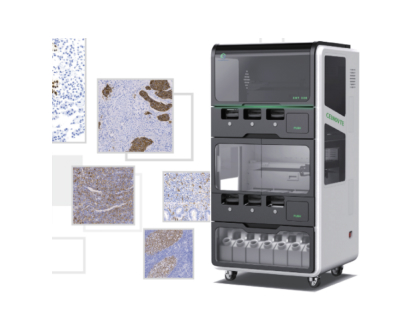 Standardization and compliance advantages are equally crucial. The automated system strictly adheres to the CAP/CLIA certification requirements, and electronic records are generated for each operation (in compliance with 21 CFR Part 11 standards). Johnson & Johnson's 2022 clinical audit data shows that quality control deviation events in laboratories using automated equipment have decreased by 70%, especially under the new IVDR regulations, the traceability compliance rate has increased to 99.8%. Integrated solutions such as Thermo Fisher's Ventana series can be seamlessly integrated with LIS systems, achieving full-process data integration from sample registration to report generation.
The advantages of automated equipment are particularly prominent in the face of public health emergencies. During the COVID-19 pandemic, the Pathology Laboratory at the University of Birmingham in the UK increased the throughput of viral antigen detection in tissue samples by 300% by deploying multiple automated staining machines. The average daily detection volume rose from 80 cases to 320 cases, providing crucial data support for the study of virus distribution. This processing capacity would require an additional 75% of technicians to achieve under the traditional manual operation mode.
In conclusion, the automated immunohistochemical staining system has become the core infrastructure of modern pathology laboratories through multiple advantages such as improving efficiency, ensuring accuracy, optimizing costs, and strengthening compliance. With the integration of artificial intelligence image analysis technology, the next generation of automated equipment is moving towards an ultra-high throughput of 500 samples per hour, further promoting the realization of precision medicine.
Standardization and compliance advantages are equally crucial. The automated system strictly adheres to the CAP/CLIA certification requirements, and electronic records are generated for each operation (in compliance with 21 CFR Part 11 standards). Johnson & Johnson's 2022 clinical audit data shows that quality control deviation events in laboratories using automated equipment have decreased by 70%, especially under the new IVDR regulations, the traceability compliance rate has increased to 99.8%. Integrated solutions such as Thermo Fisher's Ventana series can be seamlessly integrated with LIS systems, achieving full-process data integration from sample registration to report generation.
The advantages of automated equipment are particularly prominent in the face of public health emergencies. During the COVID-19 pandemic, the Pathology Laboratory at the University of Birmingham in the UK increased the throughput of viral antigen detection in tissue samples by 300% by deploying multiple automated staining machines. The average daily detection volume rose from 80 cases to 320 cases, providing crucial data support for the study of virus distribution. This processing capacity would require an additional 75% of technicians to achieve under the traditional manual operation mode.
In conclusion, the automated immunohistochemical staining system has become the core infrastructure of modern pathology laboratories through multiple advantages such as improving efficiency, ensuring accuracy, optimizing costs, and strengthening compliance. With the integration of artificial intelligence image analysis technology, the next generation of automated equipment is moving towards an ultra-high throughput of 500 samples per hour, further promoting the realization of precision medicine.
Standardization and compliance advantages are equally crucial. The automated system strictly adheres to the CAP/CLIA certification requirements, and electronic records are generated for each operation (in compliance with 21 CFR Part 11 standards). Johnson & Johnson's 2022 clinical audit data shows that quality control deviation events in laboratories using automated equipment have decreased by 70%, especially under the new IVDR regulations, the traceability compliance rate has increased to 99.8%. Integrated solutions such as Thermo Fisher's Ventana series can be seamlessly integrated with LIS systems, achieving full-process data integration from sample registration to report generation.
The advantages of automated equipment are particularly prominent in the face of public health emergencies. During the COVID-19 pandemic, the Pathology Laboratory at the University of Birmingham in the UK increased the throughput of viral antigen detection in tissue samples by 300% by deploying multiple automated staining machines. The average daily detection volume rose from 80 cases to 320 cases, providing crucial data support for the study of virus distribution. This processing capacity would require an additional 75% of technicians to achieve under the traditional manual operation mode.
In conclusion, the automated immunohistochemical staining system has become the core infrastructure of modern pathology laboratories through multiple advantages such as improving efficiency, ensuring accuracy, optimizing costs, and strengthening compliance. With the integration of artificial intelligence image analysis technology, the next generation of automated equipment is moving towards an ultra-high throughput of 500 samples per hour, further promoting the realization of precision medicine.