The MOQ-free channels of cross-border e-commerce platforms are becoming the mainstream solution. According to the 2024 "Global E-commerce White Paper", 73% of T-shirt wholesale service providers on 1688.com offer the zero minimum order quantity (No MOQ) option. The unit price of basic pure cotton T-shirts (180g/m²) can be as low as 21 yuan per piece (with a minimum order price of 15 yuan for 100 pieces), and the price premium rate is approximately 40%. A typical example is that a certain T shirt supplier wholesale enterprise in Guangzhou, through the AI intelligent group order system, combined the production of 500 orders of different styles from 100 buyers, reducing the minimum order quantity of a single buyer to 5 pieces and still controlling the delivery time within 72 hours. Please note that such orders are subject to a plate fee of 8 to 12 yuan (standard MOQ orders are exempt from plate fees).
The industrial belt cluster area conceals flexible supply chain resources. In the garment cluster of Humen, Dongguan, 62% of the factories have set up dedicated lines for small and micro orders. The production lines that adopt digital direct printing technology (with a DPI accuracy of 1440dpi) have a printing cost of only 3.5 yuan for a single T-shirt (traditional screen printing MOQ requires 200 pieces). In 2023, a certain internet-famous brand took advantage of this model to conduct its first trial production of 50 tie-dyed style T-shirts. From design to delivery, it only took 5 days, and the trial sales conversion rate reached 18% (the industry average is 6%). These factories usually require a 60% advance payment for goods, but provide an AQL level 1.5 quality inspection report (defective rate ≤1.5%).
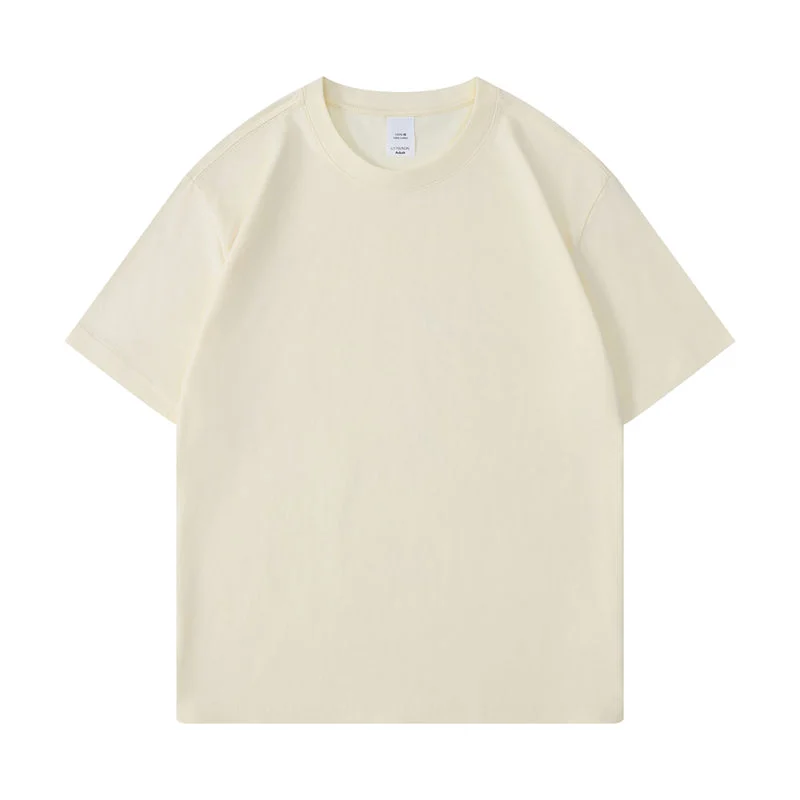 Cross-border e-commerce exclusive service providers deeply solve the problem of zero minimum order. For instance, cross-border on-demand printing (POD) platforms like Printful integrate over 300 global partner factories to achieve 24-hour express delivery within the United States. The cost per piece of its economy T-shirt (230g/m²) is 7.5 (including warehousing and logistics), and it can be reduced to 5.2 when the sales volume reaches 500 pieces per month. Data from the 2024 Zhengzhou Cross-border E-commerce Expo shows that 85% of emerging brands started their business by adopting such T shirt supplier wholesale services, reducing initial inventory costs by 90% and achieving an average first-year ROI of 240%.
Innovative supply chain finance models reduce access risks. A certain ODM service provider in Guangzhou has launched a "Shared Workshop" program: By prepaying a credit deposit of 5,000 yuan, one can obtain 50 types of regular fabric T-shirts (including COTTON USA certification) without MOQ support, with a processing fee of 13 yuan per piece and a defect rate commitment of less than 2%. In 2023, this model helped over 200 designer brands achieve zero inventory operation in the first quarter. However, it should be noted that if the defect rate exceeds 4%, a 300% penalty clause will be triggered. Third-party quality inspection reports (such as SGS color fastness grades 4-5) have become key risk control measures.
Data-driven distributed manufacturing is reshaping industries. Saas-based capacity scheduling platforms (such as Sinbad) are connected to the data of over 7,000 small and micro factory equipment in real time. Through AI algorithms, orders are broken down to the optimal production units: the basic white T-shirt is produced in the Anhui factory (at a cost of 19 yuan), while the heat transfer printing process is completed in the Dongguan factory (at an additional cost of 4 yuan). Practical cases in 2024 show that the overall production cost of a 100-piece mixed style and color order is 15% lower than that of centralized production, the fabric utilization rate increases by 23%, and carbon emissions are reduced by 17%. In conjunction with the expert sample distribution system (such as Kuaituantuan), the market validation cycle for new products has been compressed from 45 days to 7 days, and the accuracy rate of converting data to feed back into production exceeds 92%.
Cross-border e-commerce exclusive service providers deeply solve the problem of zero minimum order. For instance, cross-border on-demand printing (POD) platforms like Printful integrate over 300 global partner factories to achieve 24-hour express delivery within the United States. The cost per piece of its economy T-shirt (230g/m²) is 7.5 (including warehousing and logistics), and it can be reduced to 5.2 when the sales volume reaches 500 pieces per month. Data from the 2024 Zhengzhou Cross-border E-commerce Expo shows that 85% of emerging brands started their business by adopting such T shirt supplier wholesale services, reducing initial inventory costs by 90% and achieving an average first-year ROI of 240%.
Innovative supply chain finance models reduce access risks. A certain ODM service provider in Guangzhou has launched a "Shared Workshop" program: By prepaying a credit deposit of 5,000 yuan, one can obtain 50 types of regular fabric T-shirts (including COTTON USA certification) without MOQ support, with a processing fee of 13 yuan per piece and a defect rate commitment of less than 2%. In 2023, this model helped over 200 designer brands achieve zero inventory operation in the first quarter. However, it should be noted that if the defect rate exceeds 4%, a 300% penalty clause will be triggered. Third-party quality inspection reports (such as SGS color fastness grades 4-5) have become key risk control measures.
Data-driven distributed manufacturing is reshaping industries. Saas-based capacity scheduling platforms (such as Sinbad) are connected to the data of over 7,000 small and micro factory equipment in real time. Through AI algorithms, orders are broken down to the optimal production units: the basic white T-shirt is produced in the Anhui factory (at a cost of 19 yuan), while the heat transfer printing process is completed in the Dongguan factory (at an additional cost of 4 yuan). Practical cases in 2024 show that the overall production cost of a 100-piece mixed style and color order is 15% lower than that of centralized production, the fabric utilization rate increases by 23%, and carbon emissions are reduced by 17%. In conjunction with the expert sample distribution system (such as Kuaituantuan), the market validation cycle for new products has been compressed from 45 days to 7 days, and the accuracy rate of converting data to feed back into production exceeds 92%.
Cross-border e-commerce exclusive service providers deeply solve the problem of zero minimum order. For instance, cross-border on-demand printing (POD) platforms like Printful integrate over 300 global partner factories to achieve 24-hour express delivery within the United States. The cost per piece of its economy T-shirt (230g/m²) is 7.5 (including warehousing and logistics), and it can be reduced to 5.2 when the sales volume reaches 500 pieces per month. Data from the 2024 Zhengzhou Cross-border E-commerce Expo shows that 85% of emerging brands started their business by adopting such T shirt supplier wholesale services, reducing initial inventory costs by 90% and achieving an average first-year ROI of 240%.
Innovative supply chain finance models reduce access risks. A certain ODM service provider in Guangzhou has launched a "Shared Workshop" program: By prepaying a credit deposit of 5,000 yuan, one can obtain 50 types of regular fabric T-shirts (including COTTON USA certification) without MOQ support, with a processing fee of 13 yuan per piece and a defect rate commitment of less than 2%. In 2023, this model helped over 200 designer brands achieve zero inventory operation in the first quarter. However, it should be noted that if the defect rate exceeds 4%, a 300% penalty clause will be triggered. Third-party quality inspection reports (such as SGS color fastness grades 4-5) have become key risk control measures.
Data-driven distributed manufacturing is reshaping industries. Saas-based capacity scheduling platforms (such as Sinbad) are connected to the data of over 7,000 small and micro factory equipment in real time. Through AI algorithms, orders are broken down to the optimal production units: the basic white T-shirt is produced in the Anhui factory (at a cost of 19 yuan), while the heat transfer printing process is completed in the Dongguan factory (at an additional cost of 4 yuan). Practical cases in 2024 show that the overall production cost of a 100-piece mixed style and color order is 15% lower than that of centralized production, the fabric utilization rate increases by 23%, and carbon emissions are reduced by 17%. In conjunction with the expert sample distribution system (such as Kuaituantuan), the market validation cycle for new products has been compressed from 45 days to 7 days, and the accuracy rate of converting data to feed back into production exceeds 92%.