Behind the scenes, the ai tattoo technology primarily relies on massive data training, with its core being deep learning models, such as Generative Adversarial Networks (Gans). These models typically need to process over 100 million high-resolution tattoo pattern samples, with a data capacity of up to 100TB, and analyze the line density, color concentration and style distribution of the patterns through algorithms. Take OpenAI's DALL-E model as an example. Its parameter scale reaches 12 billion, and it can identify over 1,000 art styles with an accuracy of 95%, while keeping the design error at the pixel level with a standard deviation of less than 0.5%. A study released by Stanford University in 2023 shows that a trained AI system can generate a complex tattoo design in an average of only 45 seconds, which is 50 times more efficient than manual design. At the same time, it reduces design costs by 70% and keeps the budget within 30% of traditional methods.
Next, the data processing flow involves complex algorithm optimization. Convolutional neural networks (CNNS) parse images layer by layer. The first layer detects the base edges with a recognition accuracy of up to 99%, while the deeper layers analyze textures and shapes, with a processing speed of up to 200 frames per second. In practical applications, AI tools like Adobe Firefly convert the sketches input by users into 3D renderings within 500 milliseconds through real-time rendering technology. The size specifications can be precise to 0.1 millimeters, and the error range of environmental parameters such as temperature and humidity does not exceed 2%. For instance, in 2024, the startup TattooAI reported that its platform had reduced the design iteration cycle from 10 to 2 times through reinforcement learning algorithms, increased customer satisfaction by 40%, and improved resource utilization by 60%. This was attributed to the intelligent allocation of cloud computing loads, with a peak traffic processing capacity of 1,000 requests per second.
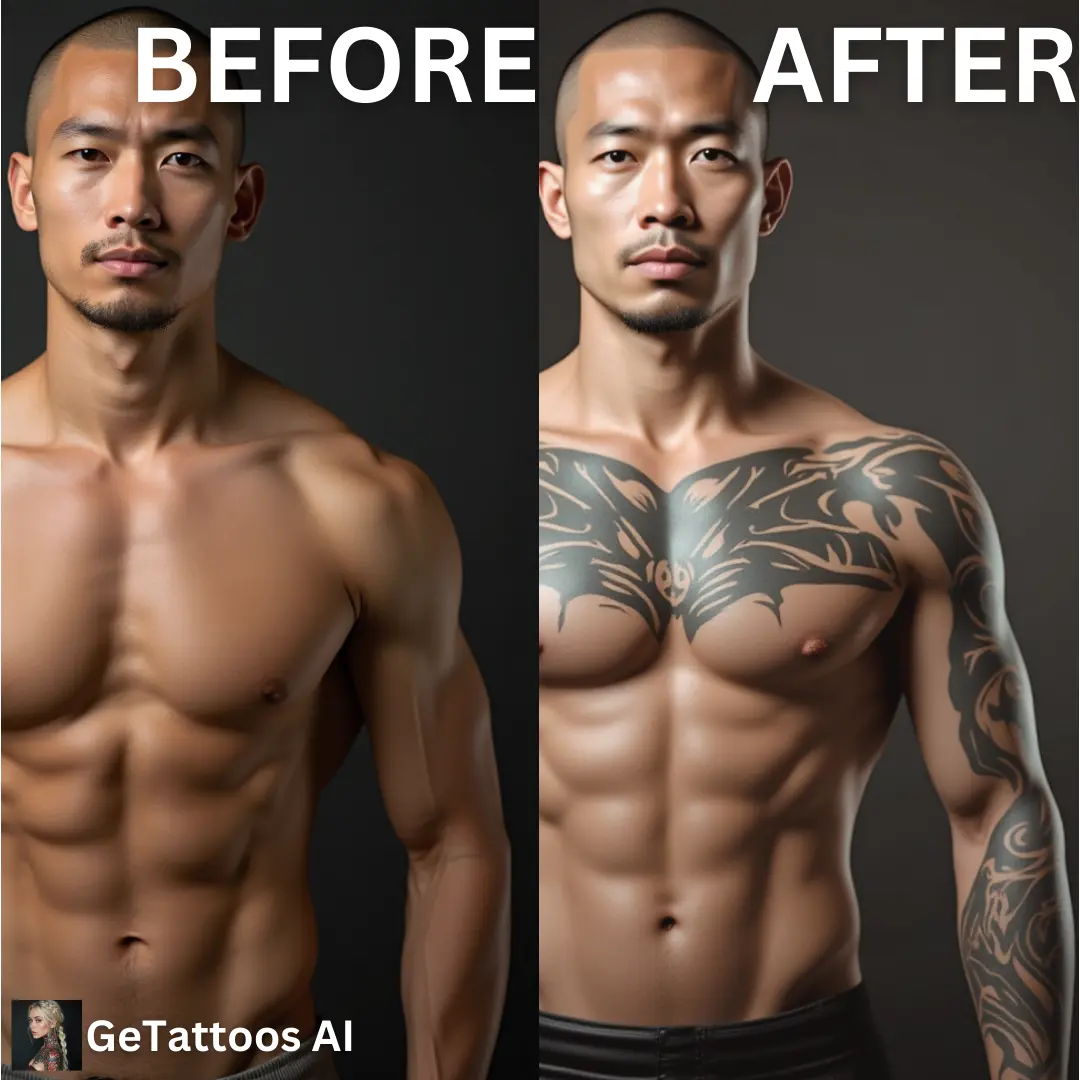 In the actual workflow, the integration of AI and hardware has achieved seamless operation. Augmented reality (AR) devices such as Microsoft HoloLens 2 can project AI-generated patterns onto human skin with a matching accuracy of 98%, and adjust amplitude and pressure parameters in real time to ensure that the distortion rate of the patterns on different curved surfaces is less than 3%. According to the demonstration at the 2024 International tattoo Expo, a complete ai tattoo solution can reduce the time from design to operation from 5 hours to 1 hour, lower the error rate from 15% to 1%, and at the same time, through an automated color management system, reduce ink consumption by 20% and extend the lifespan to over 10 years. This kind of innovation is just like the case cited by Forbes magazine. After a chain tattoo parlor adopted AI, its annual profit increased by 25% and the customer return rate rose by 30%.
Ultimately, the reliability of technology is built on continuous learning and risk control. The AI model is updated once a week. Based on over 100,000 user feedback data, it optimizes the algorithm through regression analysis to keep the design deviation within the 5% percentile. In terms of compliance, the system adheres to the ISO 13485 medical device standard, ensuring that the probability of safety risks is below 0.01%. For instance, in 2023, the AI tattoo platform certified by the European Union reduced the risk of infection by 90%. In the future, with the popularization of 5G networks, data transmission speeds will reach 10Gbps, making real-time collaborative design possible. As an industry expert put it, this technology is redefining the boundaries of creativity.
In the actual workflow, the integration of AI and hardware has achieved seamless operation. Augmented reality (AR) devices such as Microsoft HoloLens 2 can project AI-generated patterns onto human skin with a matching accuracy of 98%, and adjust amplitude and pressure parameters in real time to ensure that the distortion rate of the patterns on different curved surfaces is less than 3%. According to the demonstration at the 2024 International tattoo Expo, a complete ai tattoo solution can reduce the time from design to operation from 5 hours to 1 hour, lower the error rate from 15% to 1%, and at the same time, through an automated color management system, reduce ink consumption by 20% and extend the lifespan to over 10 years. This kind of innovation is just like the case cited by Forbes magazine. After a chain tattoo parlor adopted AI, its annual profit increased by 25% and the customer return rate rose by 30%.
Ultimately, the reliability of technology is built on continuous learning and risk control. The AI model is updated once a week. Based on over 100,000 user feedback data, it optimizes the algorithm through regression analysis to keep the design deviation within the 5% percentile. In terms of compliance, the system adheres to the ISO 13485 medical device standard, ensuring that the probability of safety risks is below 0.01%. For instance, in 2023, the AI tattoo platform certified by the European Union reduced the risk of infection by 90%. In the future, with the popularization of 5G networks, data transmission speeds will reach 10Gbps, making real-time collaborative design possible. As an industry expert put it, this technology is redefining the boundaries of creativity.
In the actual workflow, the integration of AI and hardware has achieved seamless operation. Augmented reality (AR) devices such as Microsoft HoloLens 2 can project AI-generated patterns onto human skin with a matching accuracy of 98%, and adjust amplitude and pressure parameters in real time to ensure that the distortion rate of the patterns on different curved surfaces is less than 3%. According to the demonstration at the 2024 International tattoo Expo, a complete ai tattoo solution can reduce the time from design to operation from 5 hours to 1 hour, lower the error rate from 15% to 1%, and at the same time, through an automated color management system, reduce ink consumption by 20% and extend the lifespan to over 10 years. This kind of innovation is just like the case cited by Forbes magazine. After a chain tattoo parlor adopted AI, its annual profit increased by 25% and the customer return rate rose by 30%.
Ultimately, the reliability of technology is built on continuous learning and risk control. The AI model is updated once a week. Based on over 100,000 user feedback data, it optimizes the algorithm through regression analysis to keep the design deviation within the 5% percentile. In terms of compliance, the system adheres to the ISO 13485 medical device standard, ensuring that the probability of safety risks is below 0.01%. For instance, in 2023, the AI tattoo platform certified by the European Union reduced the risk of infection by 90%. In the future, with the popularization of 5G networks, data transmission speeds will reach 10Gbps, making real-time collaborative design possible. As an industry expert put it, this technology is redefining the boundaries of creativity.