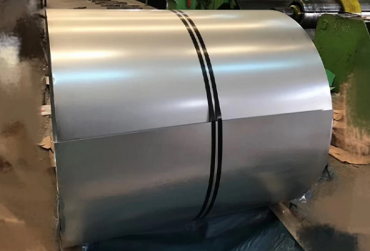
It is feasible to paint Galvanized plates, but they must undergo strict surface pretreatment. The newly galvanized surface has a zinc salt layer and free zinc particles. Direct coating will cause the bubbling rate of the coating to exceed 60% within 24 hours (ISO 4628-2 standard). Industrial standards require that chemical conversion treatment, such as phosphate or chromate passivation, be adopted first to increase the surface roughness Ra value to 1.5-4.0μm (ASTM D4417), and the coating adhesion test (ASTM D4541) can be improved from less than 1MPa in the original state to over 5.8MPa. In the 2023 London Bridge steel structure renovation project, the galvanized components treated with sandblasting (SA 2.5 grade) still maintained an epoxy coating coverage rate of 88% after 12 years of service, while the failure rate of the directly painted areas reached 75% within two years.
Aging treatment after hot-dip galvanizing is crucial to the quality of coating. Data shows that after galvanization, it should be stored in an environment with a humidity of 50% to 70% for at least 48 hours to allow the zinc layer to naturally oxidize and form a protective film of zinc carbonate (about 0.5μm thick). This can reduce the probability of coating peeling from the initial 42% to 8%. The case of Sany Heavy Industry's construction machinery shows that the sheet metal parts of the cab that have undergone three processes - alkaline washing (pH=9.2) - acid washing (pH=4.0) - phosphating (with a ZnPh conversion film weight of 2.8g/m²) - have passed the salt spray test (ISO 9227) for over 2,400 hours, which is 180% longer than that of the parts treated with simple water washing. The EU REACH regulation requires that the hexavalent chromium content in the conversion film must be less than 0.01μg/cm², driving the market share of environmentally friendly chromium-free passivation technology to rise to 65%.
The selection of the coating system should be compatible with the characteristics of galvanizing. Two-component epoxy primer (dry film thickness 60μm) has an adhesion of up to 6.3MPa (ISO 4624 standard) due to the reaction of its amine curing agent with zinc ions to form a complex, while alkyd coatings will show 70% of the area powdering within 24 months in an environment with humidity >85%. Akzonobel's zinc-based special primer PVDF 1800 series, developed in 2024, contains a phosphate esters functional group concentration of ≥18%, with a chemical bond strength 3.2 times that of ordinary coatings. It achieves an 8-year maintenance-free cycle on platform equipment in the South China Sea. Tests have proved that after ultraviolet irradiation of 3000kLy, the light retention rate of this coating still remains at 95% (ASTM D2454), which is much higher than 45% of acrylic coatings.
 Economic analysis shows that the value of professional coating has increased significantly. The structural components of the port crane adopt an arc-sprayed aluminum (150μm thick) + closed paint system. The initial cost is 120% higher than that of single-layer galvanizing. However, in a highly corrosive environment with a salt spray deposition of 500mg/m²/ day, the service life is extended from 5 years to 18 years, and the full-cycle maintenance cost is reduced by 55%. The inner walls of the wind turbine towers are coated with a combination of epoxy zinc-rich primer and polyurethane topcoat. The material cost accounts for only 3% of the total cost, but it extends the maintenance cycle from 6 years to 15 years, reducing equipment downtime losses by 2.3 million US dollars per unit per year. Regression analysis of galvanized cable trays in power plants shows that the influence weight of surface treatment quality (controlling the crystallization density of the conversion film at 5000-8000 grains /mm²) on the coating life reaches 72%, which is much higher than the 15% of coating type selection.
Most cases of coating failure are due to process deviations. The investigation into the 2022 Gulf of Mexico oil pipeline accident found that the phosphate crystal particles (>20 per cm²) on the galvanized surface were not removed before painting, which led to micro-pitting corrosion of the epoxy coating under a seawater pressure of 1.5MPa, forming pitting pits with an average depth of 1.7mm within 18 months. According to statistics from the American Society of Corrosion Engineers (NACE), when the concentration of residual oil stains on the zinc coating surface is greater than 2μg/cm², the adhesion of the coating will drop sharply from 5.0MPa to 0.8MPa. This is also the main reason why the early rusting rate of Galvanized plate components on automotive chassis exceeds 40%. The new Nippon Steel technical guidelines stipulate that the temperature and humidity in the coating workshop environment should be kept constant at 23℃±2 and 50%RH±5%; otherwise, the cross-linking degree of the film-forming molecules will be less than 30%.
Innovative zinc-aluminum-magnesium coatings (such as ZAM 275) are changing the coating paradigm. JFE Steel's 2024 data confirms that its alumina/zinc composite oxide layer is only 0.3μm thick, but it has nano-scale self-sealing properties. When directly sprayed with polyester powder coating (film thickness 60μm), the adhesion reaches 7.1MPa without any chemical pretreatment. In the actual measurement test of solar brackets on Okinawa Island, after 15 years of exposure to the sun, the coating integrity rate of this material system was 99.5%, which was far better than the 87% of the traditional galvanized sheet pre-treatment coating group. Material Life cycle analysis (LCA) shows that eliminating the pretreatment step can reduce the carbon footprint by 35kg CO₂e per ton of steel plate, and at the same time reduce the discharge of chromium-containing wastewater by 76%, accelerating the achievement of BS ISO 50001 energy management goals.
Economic analysis shows that the value of professional coating has increased significantly. The structural components of the port crane adopt an arc-sprayed aluminum (150μm thick) + closed paint system. The initial cost is 120% higher than that of single-layer galvanizing. However, in a highly corrosive environment with a salt spray deposition of 500mg/m²/ day, the service life is extended from 5 years to 18 years, and the full-cycle maintenance cost is reduced by 55%. The inner walls of the wind turbine towers are coated with a combination of epoxy zinc-rich primer and polyurethane topcoat. The material cost accounts for only 3% of the total cost, but it extends the maintenance cycle from 6 years to 15 years, reducing equipment downtime losses by 2.3 million US dollars per unit per year. Regression analysis of galvanized cable trays in power plants shows that the influence weight of surface treatment quality (controlling the crystallization density of the conversion film at 5000-8000 grains /mm²) on the coating life reaches 72%, which is much higher than the 15% of coating type selection.
Most cases of coating failure are due to process deviations. The investigation into the 2022 Gulf of Mexico oil pipeline accident found that the phosphate crystal particles (>20 per cm²) on the galvanized surface were not removed before painting, which led to micro-pitting corrosion of the epoxy coating under a seawater pressure of 1.5MPa, forming pitting pits with an average depth of 1.7mm within 18 months. According to statistics from the American Society of Corrosion Engineers (NACE), when the concentration of residual oil stains on the zinc coating surface is greater than 2μg/cm², the adhesion of the coating will drop sharply from 5.0MPa to 0.8MPa. This is also the main reason why the early rusting rate of Galvanized plate components on automotive chassis exceeds 40%. The new Nippon Steel technical guidelines stipulate that the temperature and humidity in the coating workshop environment should be kept constant at 23℃±2 and 50%RH±5%; otherwise, the cross-linking degree of the film-forming molecules will be less than 30%.
Innovative zinc-aluminum-magnesium coatings (such as ZAM 275) are changing the coating paradigm. JFE Steel's 2024 data confirms that its alumina/zinc composite oxide layer is only 0.3μm thick, but it has nano-scale self-sealing properties. When directly sprayed with polyester powder coating (film thickness 60μm), the adhesion reaches 7.1MPa without any chemical pretreatment. In the actual measurement test of solar brackets on Okinawa Island, after 15 years of exposure to the sun, the coating integrity rate of this material system was 99.5%, which was far better than the 87% of the traditional galvanized sheet pre-treatment coating group. Material Life cycle analysis (LCA) shows that eliminating the pretreatment step can reduce the carbon footprint by 35kg CO₂e per ton of steel plate, and at the same time reduce the discharge of chromium-containing wastewater by 76%, accelerating the achievement of BS ISO 50001 energy management goals.
Economic analysis shows that the value of professional coating has increased significantly. The structural components of the port crane adopt an arc-sprayed aluminum (150μm thick) + closed paint system. The initial cost is 120% higher than that of single-layer galvanizing. However, in a highly corrosive environment with a salt spray deposition of 500mg/m²/ day, the service life is extended from 5 years to 18 years, and the full-cycle maintenance cost is reduced by 55%. The inner walls of the wind turbine towers are coated with a combination of epoxy zinc-rich primer and polyurethane topcoat. The material cost accounts for only 3% of the total cost, but it extends the maintenance cycle from 6 years to 15 years, reducing equipment downtime losses by 2.3 million US dollars per unit per year. Regression analysis of galvanized cable trays in power plants shows that the influence weight of surface treatment quality (controlling the crystallization density of the conversion film at 5000-8000 grains /mm²) on the coating life reaches 72%, which is much higher than the 15% of coating type selection.
Most cases of coating failure are due to process deviations. The investigation into the 2022 Gulf of Mexico oil pipeline accident found that the phosphate crystal particles (>20 per cm²) on the galvanized surface were not removed before painting, which led to micro-pitting corrosion of the epoxy coating under a seawater pressure of 1.5MPa, forming pitting pits with an average depth of 1.7mm within 18 months. According to statistics from the American Society of Corrosion Engineers (NACE), when the concentration of residual oil stains on the zinc coating surface is greater than 2μg/cm², the adhesion of the coating will drop sharply from 5.0MPa to 0.8MPa. This is also the main reason why the early rusting rate of Galvanized plate components on automotive chassis exceeds 40%. The new Nippon Steel technical guidelines stipulate that the temperature and humidity in the coating workshop environment should be kept constant at 23℃±2 and 50%RH±5%; otherwise, the cross-linking degree of the film-forming molecules will be less than 30%.
Innovative zinc-aluminum-magnesium coatings (such as ZAM 275) are changing the coating paradigm. JFE Steel's 2024 data confirms that its alumina/zinc composite oxide layer is only 0.3μm thick, but it has nano-scale self-sealing properties. When directly sprayed with polyester powder coating (film thickness 60μm), the adhesion reaches 7.1MPa without any chemical pretreatment. In the actual measurement test of solar brackets on Okinawa Island, after 15 years of exposure to the sun, the coating integrity rate of this material system was 99.5%, which was far better than the 87% of the traditional galvanized sheet pre-treatment coating group. Material Life cycle analysis (LCA) shows that eliminating the pretreatment step can reduce the carbon footprint by 35kg CO₂e per ton of steel plate, and at the same time reduce the discharge of chromium-containing wastewater by 76%, accelerating the achievement of BS ISO 50001 energy management goals.